Spencer Hill: Why This Veteran Entrepreneur Stopped Micromanaging and Doubled His Business

Podcast Ep. 62 with Spencer Hill
got-moles.com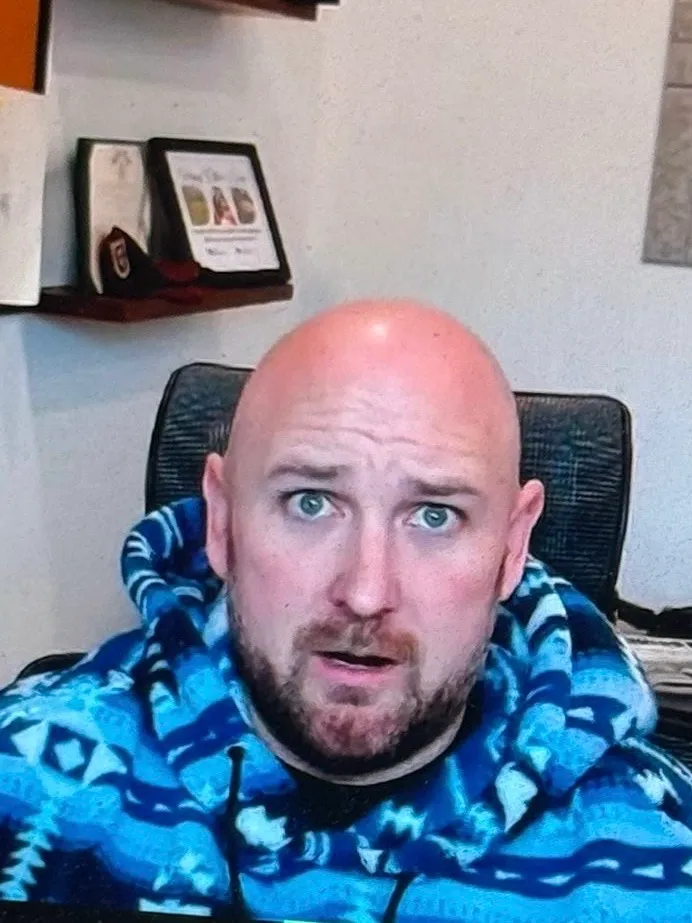
Spencer Hill: Why This Veteran Entrepreneur Stopped Micromanaging and Doubled His Business
The control hangover is the delayed cost of building a business where every decision flows through the founder, creating dependency that eventually exhausts both owner and team. Spencer Hill, founder of Got Moles pest control, describes this pattern in conversation with Roy Castleman on the Thinking Outside Your Brain with AI podcast. For owner-managers trapped in 60-hour weeks, Hill's forced absence revealed that the bottleneck was not the team's capability but the owner's inability to delegate effectively and release control. When your business won't run without you, the problem is rarely your people.
Spencer Hill started Got Moles with 40 traps in the boot of a Honda Civic. No employees. No business plan. Just a man who knew moles and a car full of equipment.
Within a few years he had built a mole control operation spanning three counties. He had staff, vehicles, a reputation, and enough revenue to make anyone from the outside think he had it figured out. From the inside, the picture was different. Spencer was so burnt out that if someone had walked through the door and offered to buy the company, he would have said yes on the spot.
The Control Hangover
Spencer did not set out to become the bottleneck. Nobody does. It happens gradually. You start the business, and everything runs through you because there is nobody else. Then you hire people, but you keep running everything through yourself because it is faster, because you know the quality standard, because the last time you let someone handle it they got it wrong.
The cost shows up in places most owner-managers do not track. Your health deteriorates gradually, not in a dramatic collapse but in the slow erosion of sleep, patience, and the ability to be present for anything other than the business.
The Four Burner Theory
Spencer described something during our conversation that stuck with me. He called it the four burner theory. Imagine a stovetop with four burners, each representing a core part of your life: family, friends, health, and business.
The theory says that to be truly successful at any one of those, you have to turn off at least one of the others. For Spencer, business had all four burners running. Family was on simmer. Friends were off. Health was off.
This is the trap that the BOS UP pillar of the T.H.R.I.V.E. method addresses directly. When your business depends on you for every decision, you do not have a business. You have a job with overhead.
Seventeen Days in the NICU
Then Spencer's son was born, and he spent 17 days in the neonatal intensive care unit. There was no gradual transition. One day Spencer was running everything. The next day he was in a hospital, and the business had to survive without him.
They stepped up. Not perfectly. Not in the way Spencer would have done it. But the work got done. The customers were served. The traps were set.
How to Delegate When You Think Nobody Can Do It Like You
The real shift was in Spencer's willingness to see what had always been true. His team was more capable than he had allowed them to be. Every time he had stepped in to correct, to check, to override, he had been teaching them that their judgment was not trusted. The 17 days in the NICU taught Spencer more about delegation and trust than any business book he had read.
Spencer did not just keep the business. He grew it. He doubled it. Not by working more hours but by working on the parts that actually required him and letting his team handle everything else.
If you recognise yourself in Spencer's story, the guide on stopping being the bottleneck walks through the practical steps of testing your team's capability before your hand is forced.
Frequently asked questions
How do I know if I am micromanaging my business?+
What is the four burner theory for business owners?+
How do I delegate when my team keeps getting things wrong?+
About Roy Castleman
Roy Castleman is a business transformation coach who built multiple seven-figure IT service businesses over 28 years before nearly hospitalising himself from burnout in 2021. He rebuilt everything through breathwork, cold exposure, AI automation, and business operating systems. Now he helps trapped owner-managers escape the businesses they built through the T.H.R.I.V.E. method.
How buried are you?
You built something real. That part worked. The part where it was supposed to give you freedom, that is the part that broke somewhere along the way. The Freedom Score Quiz takes two minutes.
Take the Freedom Score Quiz